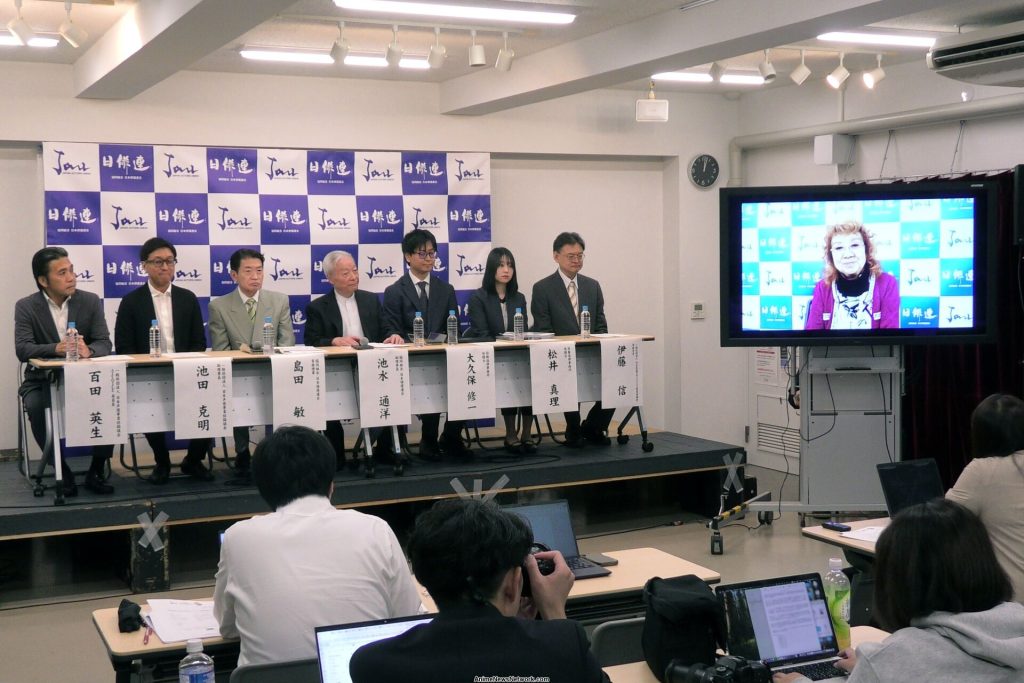
The Japan Actors Union has published its first set of rules on generative AI and voice recordings. The union presented a 21-page document at a press conference on Thursday, titled “Guidelines for the Use of Generative AI on Vocal Audio Work,” with six sections and 22 articles.
The scope is broader than most people would assume. The guidelines define vocal audio as every recording of an actor or voice actor, including private recordings made at home. AI use is defined to cover voice synthesis, deep learning, machine learning, and modeling through prompts, tagging, metadata configuration, GUI operation, and file specifications. That last grouping matters, because it closes the gap someone might argue through: running a model is not the only act the union wants covered.
What the two Dragon Ball actors said
Masako Nozawa, who has voiced Son Goku since the 1980s, said she was excited that the world she dreamed of as a child is slowly becoming real, then added that voices are being used without consent and called it disappointing. She said she hopes rules will let humans and AI have fun together.
Bin Shimada, the voice of Broly, had a sharper story. He said he had heard a generated version of Ado’s song “Usseewa” using his Broly voice. His reaction, in his words, was to be stunned, then to sigh, then to get angry. He drew a line between private use and publishing: enjoying something at home is fine, but a voice actor’s voice released online without their knowledge, saying or singing things they never said, to gain followers and profit, is not something he can accept.
This has been building for years
Voice actors have been dealing with unauthorized voice use for a while, and several responses predate these guidelines.
Yūki Kaji built his own answer. He developed a voice synthesis program called Soyogi Fractal, released in June 2024, after saying he was worried about copyright questions around voices. He left his agency VIMS on April 8 and started a company for the project the following day.
In late October 2024, a group of voice actors founded No More Mudan Seisei AI, an organization created specifically to protect performers from unauthorized generative use of their voices.
The legal side has moved too. Kenjirō Tsuda sued the operator of TikTok last November over videos that allegedly used AI to imitate his voice. The Tokyo District Court dismissed the case in September after the videos were taken down, so he did not get a ruling on the merits. But both a Ministry of Justice expert panel and the court affirmed that a performer’s voice is protected under the right of publicity, the same way a likeness is.
That legal position is the foundation the guidelines sit on. If voices are protected, then consent and licensing become the default, not a courtesy. We have covered Level-5 apologizing for AI images in its Vision 2026 presentation and the Yuriten exhibit cancelling its anniversary event after artists objected to AI art. The pattern in both cases was the same: the objection came after the fact, and the response was an apology.
Why it matters
What the document does not do is carry legal force on its own. It is a union guideline, not a statute, and enforcement will depend on how companies, platforms, and individual creators choose to treat it. The Japanese industry has a history of self-regulation that works because the major players agree to follow it, and this will be tested the same way.
Still, the timing is notable. Generative voice tools have become cheap and convincing enough that the barrier to misuse is now a laptop and an afternoon. A 21-page framework with defined terms, published by the union that represents the people whose voices are at stake, gives performers something concrete to point at when they ask a platform to remove a clip.
The Kaji case is the interesting one for the long run. Rather than only asking others to stop, he built a licensed alternative and structured a company around it. If that model spreads, the argument shifts from prohibition to control, and voice actors get a way to say yes on their own terms instead of only saying no.
Source: Anime News Network, citing the Japan Actors Union’s website and PR Times via Eiga Natalie
Featured image: The Japan Actors Union press conference on generative AI guidelines, via Anime News Network.