Japan's annual list of Persons of Cultural Merit includes anime director Rintarō this year, an honor that has reached the animation industry only rarely. His real name is Shigeyuki Hayashi, and he is 85.
The citation arrives in a busy stretch for him. He wrote the original story draft for Toei Animation's new film based on Leiji Matsumoto's Galaxy Express 999, a franchise he already shaped once. His 1979 Galaxy Express 999 film, its sequel Adieu Galaxy Express 999 and the Emeraldas special all came from his direction.
Who he is
Rintarō was born in Tokyo on January 22, 1941, and started in the industry at 17 as an in-between animator on Hakujaden, the 1958 film that is usually named as the first Japanese animated feature in color. He moved to Osamu Tezuka's Mushi Production and directed his first episode there, the fourth instalment of Astro Boy, in 1963. He went freelance in 1971, co-founded Madhouse, and has spent the decades since moving between studios rather than settling in one.
The filmography is long and it is not built on a single genre. Galaxy Express 999, Space Pirate Captain Harlock, Harmagedon, The Dagger of Kamui, X/1999, Metropolis and Yona Yona Penguin all carry his name as director. He worked alongside Tezuka on Astro Boy, Kimba the White Lion and Phoenix: Karma Chapter, a run that put him inside the founding years of television anime rather than looking back at them.
He is also a founding member of JAniCA, the Japanese Animation Creators Association, the labor group that has pushed for contract and credit standards in an industry that has historically offered neither. In recent years he has lectured at Kyoto Seika University. Union work is slow work, and he has stayed with it for decades.
The manga that helped here
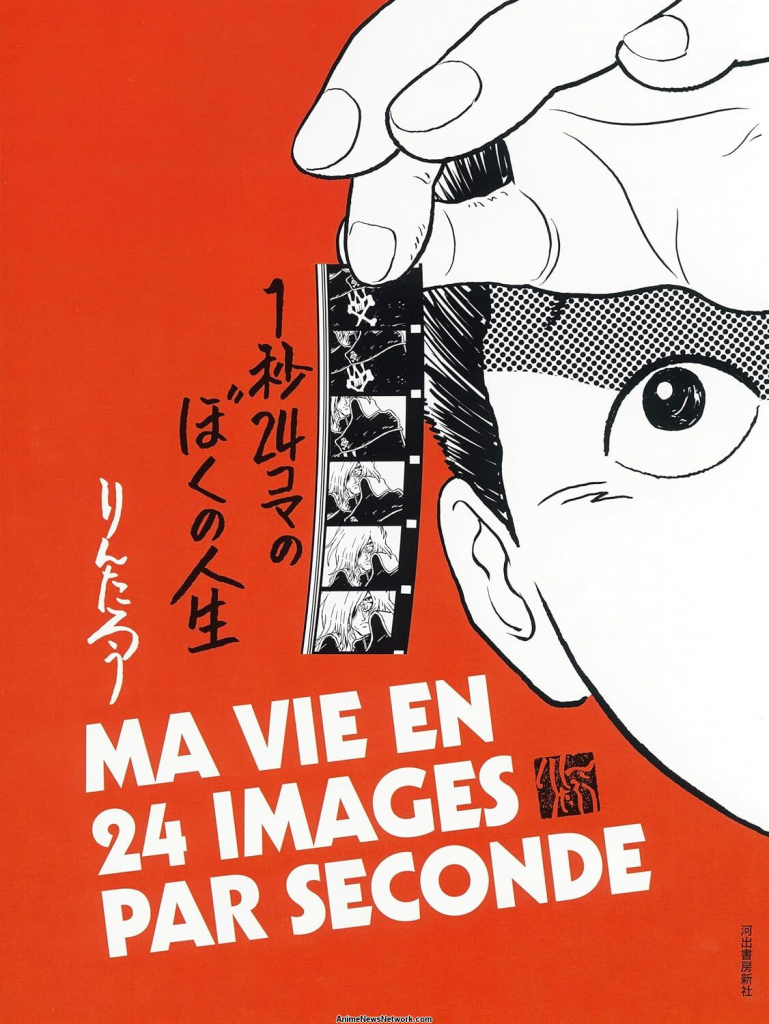
Rintarō's autobiographical manga My Life in 24 Frames per Second began in January 2024 and won the Grand Prize at the 29th Tezuka Osamu Cultural Prize. It was also nominated for Best Graphic Memoir at the 2026 Will Eisner Comic Industry Awards.
That book matters for this honor. A director's case for cultural merit usually rests on the films, which are decades old and easy for a committee to file as entertainment. A memoir about the work itself, written and drawn by the director and then recognized by the Tezuka prize jury, makes the argument in a form the cultural establishment already reads.
He also directed a silent short in 2023, "Manga Cinema dedicated to Sadao Yamanaka: Nezumikozō Jirokichi," his first directing work in 14 years. It screened at the first Niigata International Animation Film Festival in March 2023.
Why the honor lands differently now
Animation has been part of Japan's cultural export for decades, and the country's official honors have been slow to say so. Last year's list included Masako Nozawa, the voice of Son Goku and Kitarō, as the first voice actor to be named a Person of Cultural Merit. Manga creator Keiko Takemiya was on the same list, along with dancer and actor Min Tanaka and playwright Hideki Noda.
Two years of animation and manga names in a row is not a coincidence, and it is not only about the recipients. The pool of people who built the industry in the 1960s and 1970s is thinning, and the honors list is one of the few places where that generation gets named while it can still be thanked.
For Rintarō specifically, the timing is neat. The Galaxy Express 999 film he directed in 1979 is still the version most people picture when they hear the title, and he is now credited on a new film in the same franchise nearly 50 years later. Very few directors get to be both the person who defined a story and the person still consulted about it half a century on.
What comes next
The new Galaxy Express 999 film has not announced a release date. Rintarō's credit on it is for the original story draft, not direction.
There is no ceremony date worth marking on a calendar for readers outside Japan, and no streaming tie in. The honor is a line in a government list. It is also the clearest public statement Japan has made about who built its animation industry, and this year it named a director whose best known work is about a train that runs through space.
Source: Anime News Network.
Featured image: cover of Rintarō’s autobiographical manga My Life in 24 Frames per Second (1-byō 24-koma no Boku no Jinsei), via Anime News Network.