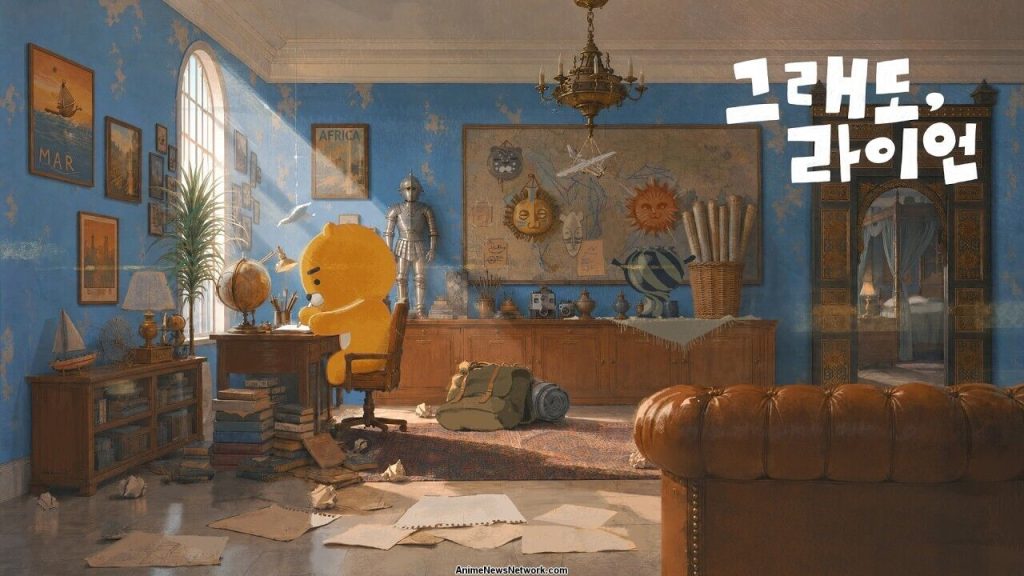
Kakao announced on November 10 that it has produced Ryan Begins, a seven-minute animated short starring its mascot character Ryan, with technical help from OpenAI. The company calls it the first AI short animation built around the character.
The details are more interesting than the milestone claim. The production team used ChatGPT's image generation to produce initial frames from scene sketches and prompts. Human artists then reworked those frames by hand until they matched the intended look. For a single scene, the team says it went through about 1,500 prompts to get the direction and emotional tone right.
Read that number again. Fifteen hundred attempts for one scene is not a story about automation saving labour. It is a story about a studio burning through attempts to force a generative model toward a specific result, then handing the survivors to artists anyway.
Who made it
Jiwon Han directed. Han previously directed Lost in Starlight, the Netflix animated film. Young-jun Kim served as AI supervisor, which is a job title that barely existed three years ago and now appears on production credits.
Han said the team focused on conveying Ryan's emotions without dialogue and without exaggerated facial expressions, leaving the audience to interpret the story for themselves. Kim described the process in similar terms: whenever the generated images missed the intended emotional tone, the team revised them, and he credits the creators' decisions and hands-on work for the final result.
Neither statement sounds like someone claiming the machine did the work. Both read like people defending a labour-intensive process.
The screening
Kakao held an advance screening and Q&A on November 8 at Movieland in Seongsu-dong, Seoul, with an exhibition walking through the production process. Tickets for the Q&A sold out within a day.
That is the part worth noting. A seven-minute AI-assisted short filled a Seoul cinema and moved tickets fast, which says something about how much appetite exists for the character and how little resistance there is to the method, at least among people who already like Ryan.
The source material
The webtoon Ryan Begins launched last year and is built on Ryan, the Kakao Friends mascot. Previous Kakao Friends webtoons were slice-of-life gag strips. This one is the first with an actual storyline that builds out Ryan's fictional universe.
There is no English version of the original webtoon available, which limits how much of the source an international audience can check against the short.
Why the industry is watching
Japan's animation studios have spent two years arguing about generative AI in public, and mostly arguing badly. There was the Felix Film job listing that promised applicants could work with image generation tools and then quietly rewrote the requirement when people noticed. There was the Yuriten exhibition that cancelled its 10th anniversary event after organisers admitted AI had been used in the announcement visual and in decorations at the show. There were the new guidelines from the Japan Actors Union attempting to set terms for voice recordings before the terms were set for them.
Kakao's approach is the opposite of all that. It announced the project, screened it, and published the number of prompts involved. Whether that transparency holds up as a defence depends on details Kakao has not shared: how much the artists were paid, how the work was credited, and whether the 1,500-prompt figure is a boast or a confession.
My read is that it is both. Nobody outside the project can say whether seven minutes of finished animation justifies that many attempts, because nobody outside the project has seen the cost breakdown.
What it means for the wider conversation
The demo that generative AI can produce animation nobody wants to watch has been running for two years. What Kakao is claiming is narrower and more credible: that the tools can help a small team reach a specific visual target faster than starting from nothing, provided artists clean up afterwards.
That is a much less exciting claim than "AI makes anime now." It is also the only version of the claim that has survived contact with production reality so far.
Source: Anime News Network, citing YNA reporting by Ji-eun Oh.
Featured image: Still from the Ryan Begins short animation, via Anime News Network.