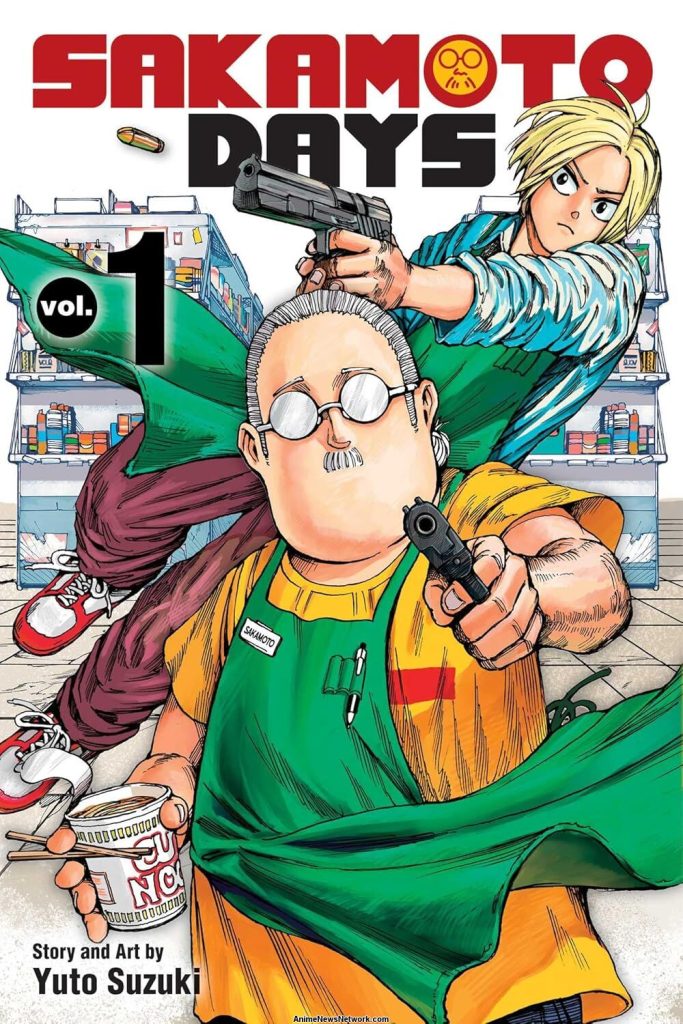
Yuuto Suzuki’s Sakamoto Days published its final chapter in this year’s 52nd issue of Shueisha’s Weekly Shonen Jump on Monday, closing a run that started in November 2020 and turned a retired hitman running a corner store into one of the magazine’s most reliable performers.
The ending does not arrive all at once. Shueisha will ship the 30th compiled volume on January 4, 2027, then the 31st and final volume on April 30. Readers who follow the story chapter by chapter are done now. Readers who wait for the tankobon have two more books to go.
The series had been signalling its finish for a while. In July the manga announced it was heading into its climax, and the “final battle” arc had already started in August 2025. That is a long runway, and it fits a series that spent years building out a cast of assassins and the bureaucratic order sitting behind them.
Sakamoto Days reached 18 million copies in circulation worldwide as of August.
How the series got here
Suzuki first drew a one-shot called “Sakamoto” in Shueisha’s Jump Giga in December 2019, then launched the main series in Weekly Shonen Jump a year later. Viz Media and MANGA Plus handle the English release digitally, Viz also prints it, and the premise is as simple as it is durable: Taro Sakamoto, a legendary hitman, retires, marries, opens a shop, and keeps getting pulled back into the world he left.
The wider franchise grew alongside the manga. A spinoff, Sakamoto Holidays, launched in Saikyō Jump in July 2024 with Tetsu Ōkawa drawing, and Ōkawa reported earlier in November that the spinoff is reaching its climax too. Two novels followed, in April 2023 and December 2024.
Then there is the anime. The first season premiered on TV Tokyo and Netflix on January 11, 2025, split into two parts, with the second part opening on July 14. Season 2 is set for January 18, roughly three weeks before the last volume lands.
And a live-action film opened on April 29, directed and written by Yūichi Fukuda. It sold 346,000 tickets for 478 million yen in its first three days, about US$3.05 million, and ranked fourth that weekend. Over its first eight days, which covered the whole of Golden Week, it moved 1.14 million tickets and 1.5 billion yen, around US$9.58 million.
Why the timing matters
Because of how tightly the milestones cluster. The final chapter, the last volume and the second anime season all land inside about four months. Most long-running Jump series scatter those events across years, and anime viewers usually end up waiting on a manga that finished long ago or reading ahead of a show that has not caught up. Here the two tracks are close enough that someone who only watches the anime can watch the story finish on screen at roughly the pace the manga just finished on paper.
There is a business angle too. Jump’s 52nd issue does not just close one series; it opens another. A new title, Tonari no Tenis-bu no Kimi to, starts in the next issue, and Hitsuji Gondaira’s Ginza Uradoori Kouban no Hizuki-san debuted in that same 52nd issue. Magazine slots get recycled fast.
What is left to buy
The manga is complete at 31 volumes. Volume 30 arrives January 4, 2027, and volume 31 closes it out on April 30. Viz’s English print edition trails the Japanese release, so English readers will be waiting past those dates for the final books, and the digital chapters through MANGA Plus and Viz are already finished.
For a series that began as a one-shot about a shopkeeper who used to kill people for money, 31 volumes and 18 million copies is a strange, funny outcome. Suzuki got to end it on his own schedule rather than the magazine’s, which in Weekly Shonen Jump is not the norm.
Source: Anime News Network, citing this year’s 52nd issue of Weekly Shonen Jump.
Featured image: Sakamoto Days manga artwork by Yuuto Suzuki, via Anime News Network. © Yuuto Suzuki / Shueisha